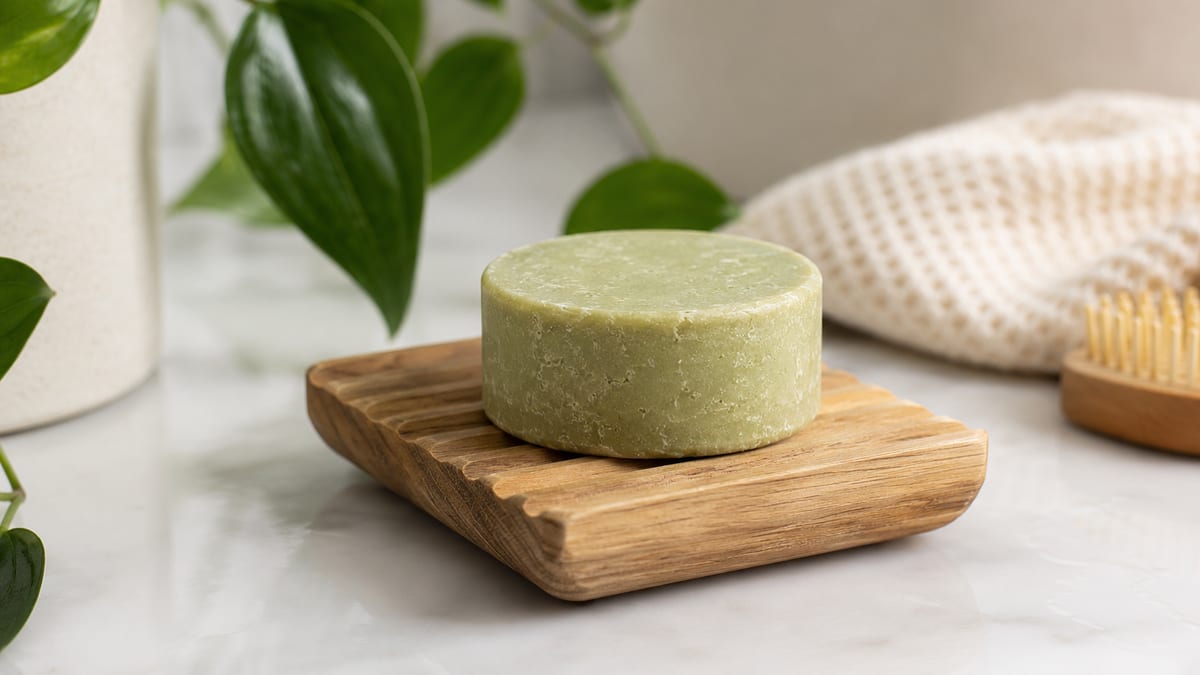
What a solid shampoo bar is and how it differs from regular shampoo
A solid shampoo bar is the same shampoo, only pressed into a bar without water. In a usual bottle up to 70-80% of the contents is water, while here there is none: what remains are concentrated cleansing bases, conditioning ingredients and oils. Because of that, one small bar replaces one or even two-three bottles of liquid product. It looks like soap, but soap and shampoo are not the same thing: ordinary soap is alkaline and dries the hair, whereas a well-made solid shampoo uses mild cleansing bases with a pH suited to the scalp. The way it works is the same as liquid shampoo: the lather lifts sebum, dust and styling residue and rinses away with water.
Pros of a solid shampoo bar
The format became popular for a reason — it has several genuinely practical advantages, not just an eco-friendly image.
- No plastic: there is no bottle to throw away later, which means less waste and less pressure on the environment.
- Concentrated and economical: with no water in the formula, a bar lasts a long time and per wash often works out cheaper than a bottle.
- Travel-friendly: a bar will not leak in your bag and is not subject to the liquid limits for carry-on luggage.
- Compact: it takes up little space and is easy to bring to the gym, a trip or a business stay.
- Often a cleaner formula: many solid shampoos have a shorter ingredient list and skip the extra preservatives that liquids need because of their water content.
- Less plastic cosmetics in the bathroom: one bar instead of several different bottles.
Cons and common myths
An honest look at the weak spots — so your expectations stay realistic. Most of these are solved by habit and the right choice of bar.
- An adjustment period: for the first few washes hair can feel unusual, especially if you used silicone shampoos before.
- The bar itself needs care: if it constantly sits in a puddle of water, it softens and runs out faster.
- The myth "it is just soap": a quality solid shampoo is made with mild surfactants and a suitable pH, not on alkali like ordinary soap.
- The myth "no lather means no cleaning": it is the cleansing agents that wash, not the foam; mild bases may lather less, and that is normal.
- Finding your match: as with liquids, not every bar suits you on the first try — sometimes you need to test a formula for your hair type.
How to use a solid shampoo bar
Nothing complicated — only the way you apply it differs. The key rule: apply lather, not the bar itself rubbed over your hair like a sponge.
- Wet your hair and the bar thoroughly with warm water.
- Glide the bar a few times over your scalp and the roots, or work up a lather between your palms.
- Set the bar aside and spread the lather with your fingers over the scalp and lengths, massaging as you would with regular shampoo.
- Rinse thoroughly — leftover product on the hair can make it feel heavy.
- For very oily hair or hard water you can lather twice: the first pass removes the main dirt, the second cleanses.
Do you need conditioner after a solid shampoo bar
Shampoo is about cleansing, not nourishment, so the rule here is the same as with liquid: most people, especially those with long, dry, porous or colored hair, need a conditioner or balm. After washing, hair is cleaner and the cuticle lifts slightly, and conditioner smooths it, makes combing easier and removes static. Solid conditioner bars also exist — a logical match for a solid shampoo, so the whole routine stays plastic-free. People with short hair or oily roots sometimes skip conditioner or apply it only to the ends; here it is best to go by how your hair feels rather than a one-size-fits-all rule.
How to choose a solid shampoo bar for your hair type
The main thing when choosing is the formula and how well it matches your hair type. What to look at:
- Oily hair: look for light cleansing formulas without heavy oils and silicones that quickly weigh the roots down.
- Dry and porous hair: bars with oils and nourishing ingredients that cleanse gently without over-drying work well.
- Colored hair: choose sulfate-free formulas without harsh surfactants — they are gentler on the pigment and keep the color longer.
- Sensitive scalp: a short ingredient list, minimal fragrance and mild cleansing bases are preferable.
- Without SLS/sulfates: labels like "sulfate-free" mean gentler cleansing, which is especially valuable for colored and fine hair.
- pH and base: a good solid shampoo is made as a shampoo on mild surfactants, not as a chunk of alkaline soap.
How to store a solid shampoo bar so it does not go soggy
A bar's lifespan depends almost entirely on how it dries between washes. The main enemy is constant moisture: if the shampoo sits in water, it softens, loses its shape and runs out far faster. Keep it on a draining soap dish or a rack so water flows off rather than pooling under the bar. For travel, a tin or ventilated case is better than an airtight bag where dampness lingers. After washing, let the bar dry and do not leave it under the direct stream of the shower. Stored this way, one bar lasts a long time and stays firm right to the end.
Sharme Hair solid shampoos and balms as a reference
If you want to try the format, hair care in the Greenway range is handled by Sharme Hair — it includes solid shampoos and balms made specifically as hair products, not as ordinary soap. It is a convenient starting point: you can put together a "shampoo plus solid balm" pair and cover your whole routine with no plastic bottles, picking a formula for your hair type. Greenway partners buy products with a discount from 20%, so switching to the solid format also turns out cheaper. For specific items, ingredients and prices, see the brand pages.