What household chemicals are actually made of
Almost any cleaning product is a blend of several functional ingredients: surfactants that lift away dirt and grease, builders that boost performance, bleaches, preservatives, fragrances and dyes. Many of them are genuinely effective on their own, and the problem is not "chemistry in general" but the concentration, how aggressive a specific substance is, and how well the product rinses off. To choose wisely, it helps to know the usual suspects that turn up most often in ingredient lists and raise questions among dermatologists and environmental experts.
Which ingredients raise the most questions
Below are the components worth watching for when you read a label. These are not "poisons" but substances with their own quirks and risks when there is frequent contact, high concentration or poor rinsing.
- Anionic surfactants (such as sulfates) — strong degreasers, but they can dry out and irritate the skin on your hands with frequent contact without gloves.
- Phosphates and phosphonates — soften water and boost wash performance, but once they reach waterways through runoff they fuel algae blooms and degrade water quality.
- Chlorine and sodium hypochlorite — powerful bleaches and disinfectants that give off a harsh smell and fumes that irritate the airways.
- Fragrances and phthalates — responsible for a long-lasting scent, but they are among the common causes of contact allergy and reactions in sensitive people.
- Optical brighteners — they do not actually clean; they visually "whiten" fabric by settling on the fibers and staying in contact with the skin.
- Preservatives and dyes — needed for shelf life and appearance, but they add substances you can easily do without on your skin and dishes.
How household chemicals can affect skin and breathing
The most common everyday effect is dry, tight, flaky skin on the hands after washing dishes or cleaning without gloves. Aggressive surfactants disrupt the skin's natural protective barrier, so it loses moisture faster. For people with sensitive skin and a tendency toward dermatitis, frequent contact can trigger irritation and contact allergy — especially to fragrances and preservatives. A separate issue is volatile substances: chlorine fumes and harsh fragrances irritate the mucous membranes and airways, which is especially noticeable in small, poorly ventilated bathrooms and kitchens, and is a real concern for people with asthma and for children.
Why residue stays on dishes and laundry
Many ingredients are designed to cling to surfaces and keep working longer — which is exactly why they do not always rinse away completely. A film of surfactants can stay on dishes if you rinse in a hurry with too little water. After a wash, traces of detergent, softener and optical brighteners settle on laundry — and they stay in contact with your skin all day. This is one reason to avoid exceeding the dose, to rinse dishes thoroughly and, when needed, to run an extra rinse cycle, especially for children's items and the clothes of people with sensitive skin.
Environmental impact: what goes down the drain
Everything we rinse away goes into the sewer and then into the water supply. Phosphates and some surfactants break down poorly and contribute to eutrophication — an overload of nutrients in waterways that drives runaway algae growth, drops oxygen levels and harms aquatic life. That is why label claims like "biodegradable surfactants" and "phosphate-free" are not box-ticking marketing but a real criterion for choosing a more eco-friendly product. A lighter load on treatment plants and waterways is a solid argument in favor of concentrates and eco formulas.
How to read the label and reduce risks
The key skill of a safety-minded consumer is to read the label and not exceed the recommendations. A few practical rules that work for any cleaning product:
- Read the ingredients: look for "phosphate-free," "chlorine-free," "biodegradable surfactants," and "no dyes or optical brighteners."
- Stick to the recommended dose — more product does not mean cleaner; it just rinses off harder and runs out faster.
- Rinse dishes well and use an extra rinse for laundry, especially children's.
- Wear gloves when handling aggressive products and never mix different formulas (for example, chlorine and acid).
- Ventilate the room during and after cleaning, and do not spray aerosols in an enclosed space.
- Store cleaning products separately from food and out of children's reach.
Eco alternatives: what to swap aggressive chemicals for
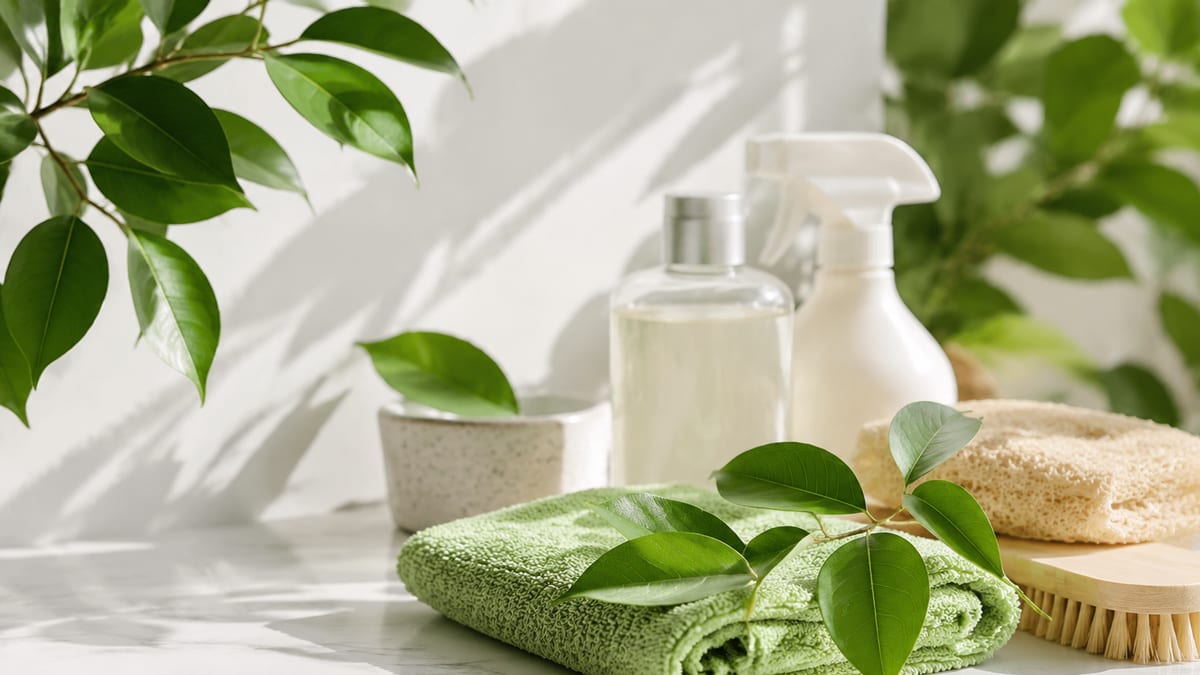
The most radical way to cut the amount of chemicals at home is, where possible, not to use them at all. Green Fiber microfiber by Greenway cleans many surfaces with plain water thanks to its fiber structure, with no detergent — handy for glass, mirrors, tile, appliances and any surface where it is especially important to leave no chemical residue. Where a product is still needed, choose concentrates and eco formulas: AquaMagic all-purpose cleaners go a long way and are designed to be gentler on skin and on wastewater, while BioTrim eco laundry care is built around a formula free of aggressive ingredients. For hands and body, a sensible swap for scented antibacterial soap is natural soap with a clear ingredient list. This kit covers most everyday chores with a lighter chemical load.
Eco cleaning is not about inconvenience
Switching to safer products does not mean sacrificing cleanliness or spending more time. Concentrates are more economical per use, microfiber cleans faster than a cloth-and-powder routine, and the absence of harsh fragrances is especially appreciated by families with children and allergy sufferers. Greenway partners can buy products at a discount from 20%, so switching to eco products often turns out to be the better deal financially too.